Spider-Man 3 is the low point of Sam Rami's trilogy partly due to his mishandling of Venom; luckily, Tom Hardy's version rescued the character.
Venom made his cinematic debut in Sam Raimi's Spider-Man 3, but the execution of the character was and is largely considered to have been quite bad; here's why. While almost universally considered the weakest entry in Sam Raimi's Spider-Man movie trilogy, Spider-Man 3 is not without its merits. It has an emotional story at its core that resolves threads set up in the earlier films and provides natural character progressions for Peter Parker, Mary Jane Watson, and Harry Osborn. It also has some great action (the collapsing crane), boundary-pushing special effects, and well-intentioned ideas. It's clear that Raimi and his team tried really hard to deliver a satisfying film.
The movie, however, had the unenviable task of following Spider-Man 2, widely considered to be one of the greatest superhero movies of all time. In attempting to deliver on sky-high fan expectations, and laboring under the impression that bigger is better, the film became overstuffed with villains and story, to the point where the filmmakers seriously considered splitting it into two parts. It also found itself at the mercy of endless ridicule over “Emo Peter Parker,” and this, along with Venom’s mishandling, is what the film is largely remembered for.
Ultimately, it was a film of extremes. The parts that worked, worked extremely well. The parts that didn't, however, were egregiously bad, none more than the portrayal of Venom. To actor Topher Grace's credit, it wasn't all on him; the film just didn't treat Venom with the attention and care the character deserved. Here's what went wrong.
Sam Raimi Didn't Want Venom (But Sony Needed Him)
One of the criticisms leveled at Spider-Man 3 is the number of villains. Harry Osborn's turn into the New Goblin in the third movie had been building since the first film. Sandman was then chosen as Raimi found him to be a visually interesting character; indeed, the birth of Sandman is an emotional and visually stunning sequence that is one of the best scenes in the whole franchise. Raimi was also planning to have Sir Ben Kingsley play Vulture to round out his villain roster. However, producer Avi Arad was concerned that the director was just picking his own old-school favorite villains, at the expense of the ones modern fans were interested in. Arad stepped in and convinced Raimi to replace Vulture (who Michael Keaton would eventually play in Spider-Man: Homecoming and Morbius), with fan-favorite Venom.
A character is always going to suffer when a director doesn't want them in the movie in the first place. Sam Raimi has been very honest about his feelings for the character over the years, stating that he didn't like Venom's "lack of humanity" and didn't understand him. While he also says he eventually learned to appreciate Venom more during filming, this isn’t evident in the film itself, as Eddie Brock and Venom's scenes are fleeting and motivation weak. The director’s disconnect with the character is clear and results in an unsatisfying finale for the movie.
Venom Always Deserved His Own Movie
One of the primary reasons that fans have wanted Venom to have his own movie is that he is unquestionably cool. His design is eye-catching and instantly recognizable and lends itself to the visual experience of a big-budget blockbuster. Sony has yet to give the character his natural home of an R rating, though 2018’s Venom certainly pushes the boundaries of its PG-13 status to the limit.
Venom’s critics say that he’s all design and no depth; however, that’s an oversimplification. While he has been labeled a villain, a more appropriate moniker would be an antihero. The symbiote's drive in the comics to kill Spider-Man originally was down to him being rejected by the web-slinger, combined with the anger and hate Eddie Brock had at the time for Spider-Man. In its natural un-bonded state, however, the symbiote is benevolent. Later on, he set out to save innocents, as showcased in Venom’s own comic run Lethal Protector. While he does kill those he deems evil, he's still trying to help people in his own way. Given this, the character’s ethics and drive are interesting in his own right and can carry stories over and above being just a foil for Spider-Man.
What Raimi's Venom Actually Got Right
Spider-Man 3 doesn't drop the ball on all aspects of the character, however. The setup of the alien suit and how Peter uses it (at first) is, from a filmmaking and story standpoint, on par with the quality of the previous films. Though Spider-Man doesn't obtain his black symbiote suit in the same way as the comics, it's still a symbiote from outer space (conveniently arriving on a meteorite that lands near him). The movie also adapts how Peter rids himself of the Venom symbiote in a church using its bells in one of the more iconic moments in the Spider-Man trilogy. Additionally, the horror as Eddie futilely attempts to get away from the alien as it bonds with him is also genuinely harrowing.
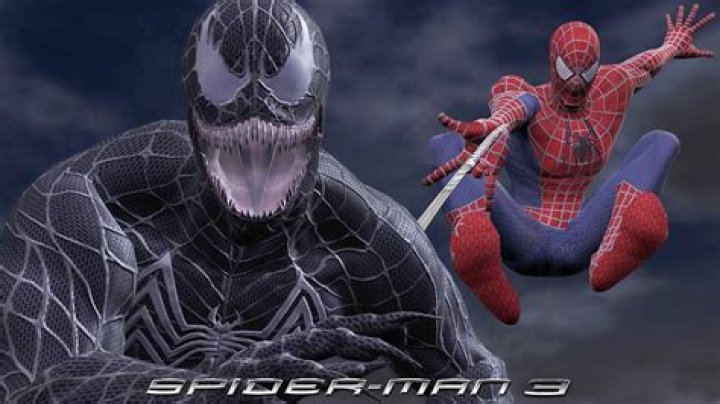
Likewise, once the symbiote has bonded with Brock and Venom is shown in his full glory, the CGI and facial design of the character are actually quite impressive. The issue, though, was Raimi's need to either immediately cut away from him or to pull back Venom’s face to show Topher Grace underneath. In doing so, the threat and visual spectacle of the character evaporate. The physical size of him is also diminutive, with Venom appearing too small as Spider-Man 3's villain to be a real threat. Topher Grace’s portrayal of Eddie Brook as a mirror image of Peter Parker has potential in early scenes, though his performance as Venom comes off as annoying rather than menacing (Grace has since admitted that he wasn’t sure why he was cast for the role). While Raimi managed to capture some elements of the character, unfortunately, he got far more wrong than right.
How Tom Hardy's Venom Rescued The Character
The original intention was for Venom to spin off from Spider-Man 3 in his own film. However, while Sam Rami was working on the fourth adventure for Peter Parker Sony decided to reboot the franchise instead. Venom finally got his solo film in 2018 from director Ruben Fleischer, with Tom Hardy as Eddie Brock. It was the first installment in Sony's Spider-Man Universe franchise, and while the film received muted reviews, it was a hit with audiences to the tune of $856 million worldwide and spawned a sequel, Venom: Let There Be Carnage.
Raimi’s Venom was barely on screen and small in stature, but Hardy’s Venom is a towering beast, his muscular appearance perfectly capturing the visuals from the comic. Hardy gives Brock and Venom separate personalities, whereas Grace in the suit was just Brock with more power–albeit, again, because Venom wasn't fleshed out by the script. Venom’s solo film uses his powers in more creative ways than Raimi did (which essentially copied Spider-Man’s abilities), and Hardy’s performance and his relationship with the alien symbiote are the highlights of the movie. Their twisted odd couple pairing delivers plenty of comedy moments, and their relationship is arguably more engaging than that of Eddie and his love interest, Anne, played by Michelle Williams.
Overall, the build-up of Venom in Spider-Man 3 isn't necessarily bad, but he was squeezed into the finale with little to do, and, along with some poor direction choices, was wasted as a character. Potentially having Brock's transformation as the epilogue to the film could have worked in the movie's favor, with Venom then being saved as the primary antagonist for the (sadly not to be) Spider-Man 4. Luckily, Venom is now thriving in his own series, and it seems inevitable that he will be reunited with Spider-Man on the big screen in the future.
Next: Why Sam Raimi Didn't Want To Use Venom In Spider-Man 3